Becoming What We Receive
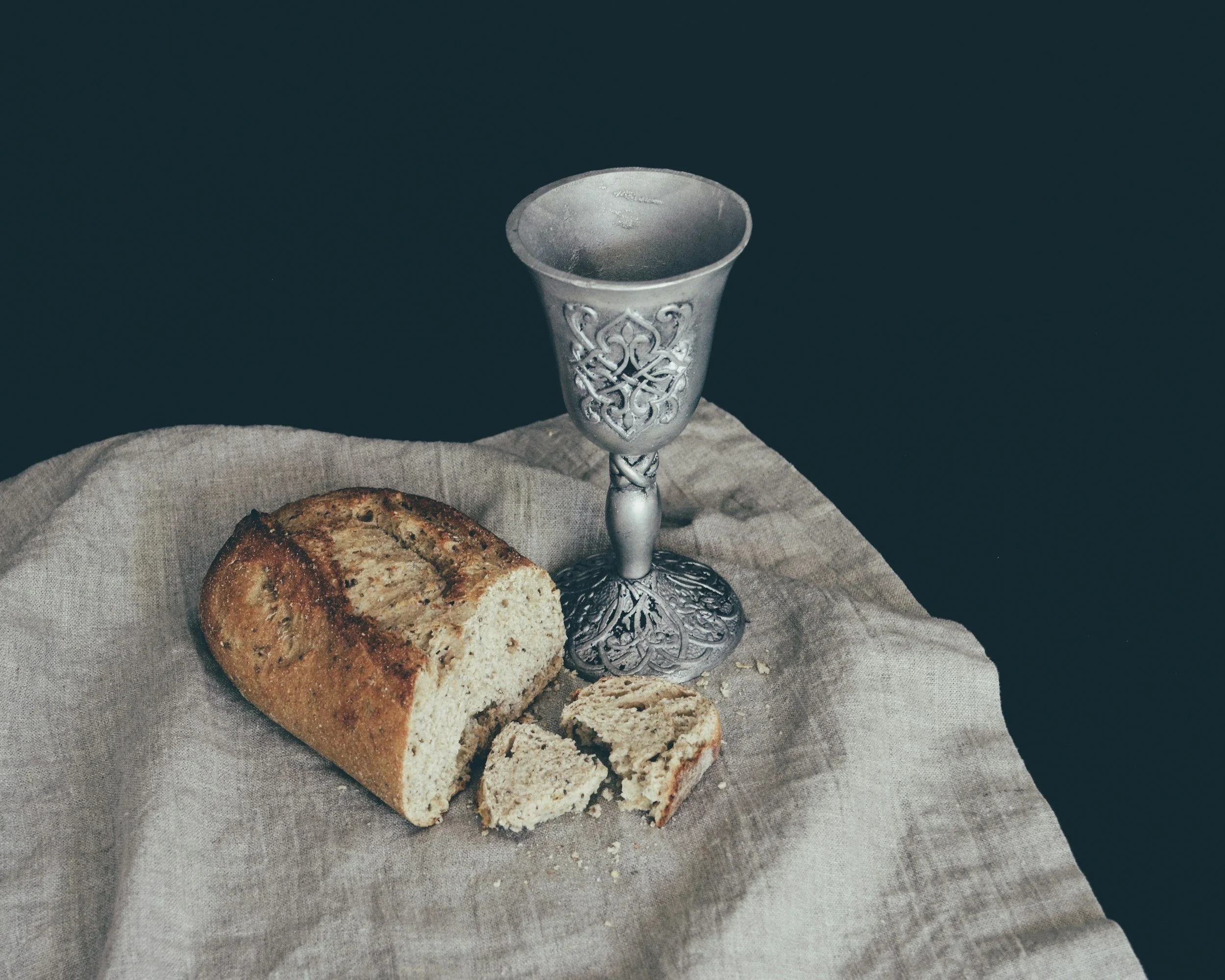
Eucharist
The headband dug into the side of my head with every painful adjustment. A hand-me-down from my four sisters, the veil had one more life to live. Dressed as a mini bride of Christ, I walked with “praying hands.” Thumbs crossed and fingers pointing to the sky, I paraded with my classmates toward the altar. I was about to swallow Jesus! For the rest of my life, the grace of this sacrament would nourish me: food for my journey, strength to face the truth of my life, unity with my brothers and sisters.
I try and fail to imagine Jesus giving a second thought to his disciples’ hands at the Last Supper. He tore bread and shared it. No one was excluded. Take and receive. Jesus’ attention was on the inside of the person: their attitude, their intention, the openness of their heart. And then he did something radical. Acting as a slave, he lowered himself, humbled himself, touched and washed the disciples’ feet. Peter couldn’t stand it and almost refused this vulnerable gesture. Jesus pointed the way. Do this while remembering me.
We often forget about this part of the story. Sometimes it's in the back of our minds. But did Jesus mean it? Doesn’t God deserve my perfect gestures, my graceful genuflection, my look of humility. Is it the way I receive that matters?
Food for the Journey
The mystery of the Eucharist boggled my mind as a child. I wondered what Jesus would taste like or what superpower I’d discover once I received it. And while I would love a superpower, I believe that it sustains me by the grace freely given to all. This food for my soul helps me to acknowledge my need for Jesus. If I receive the Body of Christ with humility, then I can live in its mystery even though I can’t comprehend it. I believe that God knows me from the inside out (Ps 139) and still welcomes me to the table. Yet, it doesn’t end there.
St. Augustine of Hippo (d. 430 AD) said, “Behold what you are. Become what you receive.” These profound words inspire me to remember that we are God’s beloved daughters and sons. To become the Body of Christ in the world means that I find a way to love my neighbor at home, in my faith community and beyond. The Eucharist calls me forth on a path that crosses the unexpected paths of others. Love one another. Do this in remembrance of me.
This spiritual food fuels my intentions to live, to love and to grow. Can I receive the Body of Christ and allow for a change in me? Fear of the unknown can sometimes prevent me from becoming what I receive.
I hear the rhetoric about the evils in secular society. And the response is often to put on “armor” to defend the faith and live a Christian life safe from the influences from out there. I recall in Scripture numerous times when Jesus interacted, healed and spoke to people outside his own Jewish community. He even named a hated Samaritan as the one who did the will of God (Luke 10:25-37). In today’s world, the Samaritan would represent anyone whom God does not favor. Who are we to say where and when God is present? My fear of something does not prevent God’s will or divine work from taking place.
The Book of Joshua states, “Have I not commanded you to be strong and courageous? Do not be afraid; do not be discouraged, for the Lord your God is with you wherever you go” (1:9). Isaiah proclaims, “Do not fear, for I am with you; do not be dismayed, for I am your God. I will strengthen you and help you; I will uphold you…” (41:10).
Do not be afraid.
I am with you wherever you go.
Fear of the secular world, and all the political ideologies that go with it, hold us back from becoming what we receive. Even in the dregs of society, God lives and moves and transforms hearts. Can I allow God to change me? I can try to follow the path of love, nourished by Jesus, reliant on God’s grace instead of being led by fear.
Strength to Face Reality
I had gotten caught up in the outward signs of holiness at Mass, especially when my children were young. It was the fishbowl effect, believing that all eyes were on us. I worried that mistakes would be taken as disrespect or a lack of understanding. My daughter would leave the pew to touch the stained glass or my son would ask a question too loud. In some ways, I believe they understood the nature of Jesus’ love and presence more than we did. Their sense of wonder led them to curiosity. Let the children come to me…My kids readily accepted the invitation to be close to Jesus while I tucked in their shirts. I tried to teach them reverence, neglecting my own reception of the Spirit.
Jesus says, the inside of the cup is dirty while the outside shines (see Luke 11:37-41). Jesus cared more for the inside of a person than their outward appearance or actions. Do not draw attention to yourselves, he’d say. He prefers quiet mercy, not public sacrifice.
I sometimes neglect the inside. I receive Eucharist while, on my way down the aisle, I might judge the unkempt family or the person who walks with the “praying hands” . Who am I to say they aren’t genuinely searching and longing for Jesus? Indeed, there I am paying attention to the outside of the cup. My intentions, my desire for closeness, my need for Jesus is greater, holier, more real than the people that I pass by. A wash of shame comes over me as I type those words. I have so much to learn. And, yet, Jesus invites me forward to be forgiven and made whole. On the way back to my seat, I realize that I am not alone and I am not any more special than every person surrounding me. Humility grounds me as I take God’s hand again, letting the Creator bring me home.
Unity With My Brothers and Sisters
I noticed a deacon standing to the side watching as we received Eucharist recently. I was caught off guard. Instead of feeling welcomed to the table, I felt like a child under scrutiny. I wondered about my strong reaction. Growing up, my father demanded that we never mess up, especially at Mass and especially in full view of other people. Fearful of punishment if I fell asleep during a long homily or I didn’t stand at the right time, I felt distracted and could not participate freely, forgetting what the Eucharist invited me to be.
That day in church, I wasn’t free to receive the Body of Christ as I am. Fear of any misstep distracted me from a vulnerable, welcoming reception of God’s grace. Instead of walking toward the altar with joyful anticipation alongside a community of faith, the unnecessary monitoring stirred a flame of anger within. Underneath all the safeguarding of the Eucharist, I sense a fear that somehow we can afflict, destroy or injure Jesus. And we have allowed this fear to demoralize, discourage and divert our attention away from every person’s longing for union with God.
The Creator of the cosmos, the One who is timeless, God who is present everywhere and always does not need our protection. If Jesus offered his body to the likes of Judas and surrendered to Roman torture and death as God’s Son, I am confident that nothing can destroy, ruin, or desecrate the Alpha and the Omega, the Risen Christ.
I remember when receiving the Eucharist brought us all to Jesus’ table, beckoning us forward as the people of God. We walked together embracing our imperfection, knowing we are forgiven, sanctified and freed from the chains that bind us, encouraged to be what we receive. As I walked forward with others in my faith community, I was not alone. I wasn’t worried about others judging me if I received Jesus’ body in my hands instead of on my tongue. I didn’t feel pressured to look pious. I knew that what God desired most from me was a change of attitude, a softening of my heart, an earnest desire to be in relationship with the Creator. The inside of the cup.
Do I perceive Eucharist as a prize for holiness? Does it separate me from those who cannot receive it? Or am I receiving the body and blood of Christ as nourishment for my soul’s journey? If Eucharist is my soul’s sustenance, if this blessed sacrament is meant to unify our Church, then the obsession with protecting it from the evils of the secular world is wasted energy. When I receive the Eucharist, I am to be the body of Christ, the hands and feet of Christ, for the world. Evil has already been overcome.
The Body of Christ
When I attended Mass at a Franciscan Shrine a few weeks ago, I felt the familiar embrace of a faith community that welcomed the stranger and fed the soul; food for the journey. There was a beautiful trust that the presence of God in that place filled the space and drew us forward. Come and find rest, come and be washed clean, come and walk in the grace of God who loves you beyond belief. We walked out with a determination to be the Body of Christ for the world.
Faith communities like that seem to be the exception. A lot of effort goes into polishing the outside of our cups while the inside is neglected. Distracted by fears of evil in the world, we have taken a wrong turn. The act of receiving the body and blood of Jesus has become a dividing line between those with the right and wrong beliefs. A push to deny communion to certain political leaders highlights this division. Even though the gestures and signs of holiness ought to take a backseat to the sincerity of heart as well as the desire to imitate Jesus in our love, so much energy goes into visible signs of piety. Jesus tells the Pharisees that they are focused too much on the surface and not enough on their inner disposition toward God and others, their sincerity, their openness to the Spirit that transforms.
I believe that Jesus wants to transform my attitudes, convictions, and ability to love so that I am more and more like the Creator. I can perform the postures that signify holiness or worthiness, but if my inner self, my soul, does not welcome the change the Spirit brings, then the gestures remain only gestures. If my love for others does not continue to expand and welcome, especially those I normally reject as evil or less than, then I am denying God’s invitation to see others as God sees them.
I can still feel my crooked veil pinching my head as I received Eucharist for the first time. “All is grace,” wrote St. Therese of Lisieux. In all things, even those deemed uncomfortable or ungodly, God is present there and with us.
Let us pray for each other as we try to become what we receive. May the Eucharist unify this divided people who long to be close to Jesus. Blessed and broken, may our hearts be open and may healing come.
Call to Action: In the comments, share how Eucharist has changed the way you see others and your role in the world.
Song for Reflection: I heard this hymn at a wedding I recently attended and it never fails to speak to my soul. If we could learn to love as the Good Shepherd! May our reception of the Eucharist open our hearts to God’s grace and to one another.